

Staff Reporter –
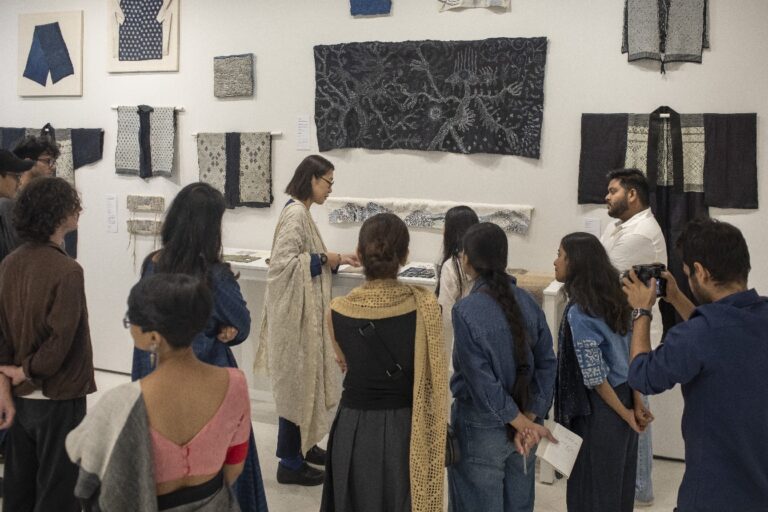
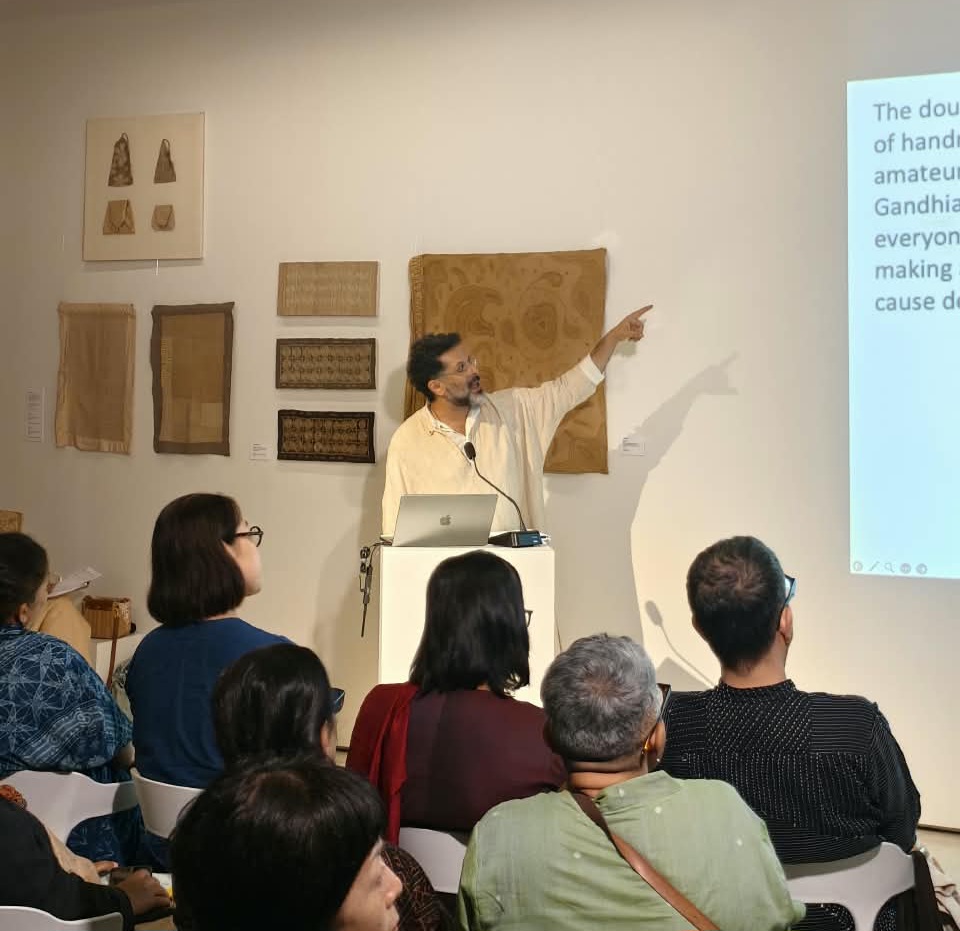
The second day of Tãka-Tãka: An India–Japan Conversation on Kantha & Sashiko continued the exploration of the histories, practices and contemporary relevance of Kantha and Sashiko. The sessions brought together master artisans, researchers, designers and cultural practitioners to examine the transmission of textile knowledge, the role of archives and museums, and the continued evolution of traditional craft practices.
The morning sessions began with Ruby Palchoudhuri, President Emeritus, Crafts Council of West Bengal, in conversation with master Kantha artisans Bina Dey, National Award-winning Kantha artisan; Mahamaya Sikdar, Shilp Guru awardee and Kantha designer. Moderated by Darshan Shah, Founder, Weavers Studio and Weavers Studio Resource Centre, the discussion traced Kantha’s journey from a domestic practice to a nationally recognised craft, exploring the preservation of stitch knowledge, intergenerational learning and the changing role of artisans.
Rina Igarashi, Senior Curator, Fukuoka Asian Art Museum, Japan, followed with a presentation on Kantha’s journey through museums and collections, tracing its growing international recognition from the 1980s onwards and examining how exhibitions and scholarship shaped its understanding beyond Bengal and Bangladesh.
Darshan Shah, Founder, Weavers Studio and Weavers Studio Resource Centre, drew on the Resource Centre’s archives to explore how historical Kantha textiles can inform contemporary design practice. The presentation considered the dialogue between Kantha and Sashiko through traditional stitch vocabularies, motifs and material sensibilities.
Kou Uchimura, Director, Iwatate Folk Textile Museum, Tokyo, examined the formation and evolution of the museum’s Kantha collection, highlighting its founder Hiroko Iwatate’s engagement with the tradition and the museum’s ongoing work in documentation, conservation and research.
Dr. Rituparna Basu, Associate Professor, Department of History, Bijoy Krishna Girls’ College, explored the contributions of Gurusaday Dutta and Stella Kramrisch to the collection and interpretation of Kanthas of Bengal in the early twentieth century, considering their role in bringing the tradition into wider artistic and cultural discourse.
The afternoon sessions began with Roopa Mehta, CEO, Executive Director, Sasha Association for Craft Producers, and Swagata Ghosh, Senior Designer, Sasha, who traced the organisation’s four-decade engagement with Kantha and artisan cooperatives. The presentation examined the role of research, market access and fair-trade practices in supporting women’s livelihoods and strengthening their socio-cultural identity.
Motomi Maekawa, Sashiko practitioner and teacher based in Milan, explored Sashiko’s journey from a regional Japanese mending tradition to a shared global practice, reflecting on the values of repair and preservation and the ways in which the craft travels through everyday making and